Resilient DeKalb

Resilient DeKalb · Office of the CEO

Building a more resilient DeKalb, one action at a time.

The DeKalb County 2040 Resilient Management Plan connects cleaner operations, healthier communities, equitable investment and measurable public progress.

Reimagine. Regenerate. Restore.

Net Zero County Operations

by 2040

Net Zero County Operations

by 2040

0

Initiatives

0

In planning

0

Active

10 of 13

Flagship areas

A legacy plan for DeKalb County

A framework designed to grow with DeKalb.

A living statement of the projects and goals carrying DeKalb County toward net zero county operations by 2040.

Resilient DeKalb is the county’s first sustainability program, led by its first Chief Sustainability Officer. The 2040 Resilient Management Plan organizes the county’s work into themed flagship areas, each named with a Re prefix, and tracks every initiative from planning through delivery.

This public view is a readable summary of the plan. It carries the goals and the shape of the work without internal budget, financing, or accountability detail.

How to read this plan

The plan follows one foundational rule: no target becomes binding until the county closes its baseline audit, known as Pillar Zero. Until then, every number is a planning figure shown as a goal rather than a commitment. The county measures first, then commits.

Healthy watersheds. Stronger communities. Resilient infrastructure.

Leadership and governance

Resilience begins with committed leadership.

ReDKB 2040 is backed by the Office of the CEO and led through the Office of the Chief Sustainability Officer.

Executive Sponsor

Madame CEO
Lorraine Cochran-Johnson

Chief Executive Officer
DeKalb County, Georgia

Program Leadership

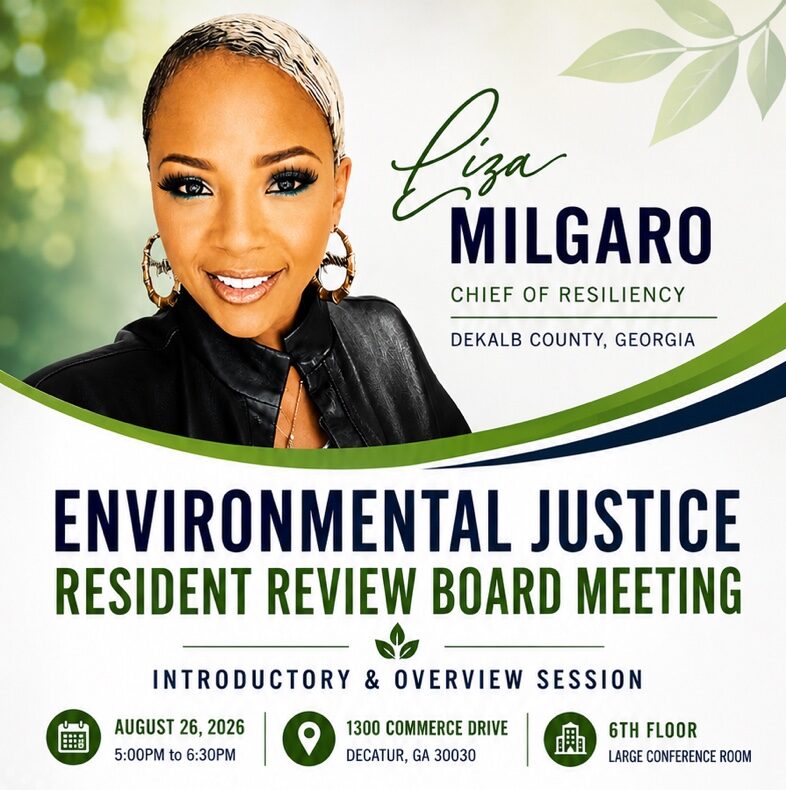
Liza Milagro

Chief Sustainability Officer
Office of the CEO

The architecture

Twelve flagships and one financial spine.

Each ReDKB flagship transforms a sustainability goal into a clear action residents can understand, track, and see at work across DeKalb County.

Energy

ReNew

Clean, renewable energy generation and procurement across county operations.

Emissions

ReDuce

Cutting greenhouse gas emissions from buildings, fleet, and operations.

Water

ReFlow

Stormwater, watershed health, and water resilience.

Waste

ReCycle

Waste diversion, composting, and the circular economy.

Materials

ReUse

Keeping materials and resources in service longer.

Mobility

ReRoute

Cleaner mobility and transportation systems.

Charging

ReCharge

EV charging and energy storage infrastructure.

Buildings

ReBuild

High-performance, resilient, healthy buildings.

Canopy

ReForest

Tree canopy, urban forestry, and natural cooling.

Equity

ReClaim

Benefits and opportunity for historically underserved communities.

Workforce

ReSkill

Green workforce development and local jobs.

Health

ReVive

Community health, wellness, and food access.

Finance

ReInvest

The funding spine that capitalizes the work.

Progress you can follow

Priority initiatives

Figures remain planning goals until the Pillar Zero baseline audit is complete.

Planning

ReNew

LED Streetlight Retrofit

Planning

ReNew

County Building Solar (SEPA)

Planning

ReFlow

South River Recovery and Performance Bond

Planning

ReCycle

Zero Waste: Composting Facility

Planning

ReForest

50K Tree Canopy Initiative

Planning

ReClaim

Solar Equity Bank

View all 22 initiatives

The complete portfolio

Initiatives (22)

Every initiative is shown with its purpose, planning stage, lead department, geographic scope, goal, intended beneficiaries, and United Nations Sustainable Development Goal alignment.

ReNew

Planning

LED Streetlight Retrofit

Replacing county streetlights with high-efficiency LED fixtures to cut energy use and maintenance across the public right-of-way.

Lead department

Public Works: Transportation

Goal

8,500 fixtures

Global goals

SDG 7 · Affordable and Clean Energy

Where

Countywide

Who it serves

All residents

ReNew

Planning

County Building Solar (SEPA)

Putting solar on county rooftops and grounds through a third-party-owned Solar Energy Procurement Agreement, with no county capital, to raise the renewable share of county operations. A feasibility study identified about 17 MW of capacity across 39 candidate county sites.

Lead department

Facilities Management

Goal

Solar on county sites

Global goals

SDG 7 · Affordable and Clean Energy

Where

Countywide

Who it serves

All residents

ReDuce

Planning

EV Fleet Transition (Phase 2)

Transitioning county fleet vehicles to electric as an emissions-reduction commitment, replacing diesel and gasoline units over time, supported by the federal clean heavy-duty vehicle program.

Lead department

Public Works: Fleet Management

Goal

300 vehicles

Global goals

SDG 13 · Climate Action

Where

Countywide

Who it serves

All residents, County workforce

ReFlow

Planning

In-Pipe Hydropower Network

Generating clean electricity from existing flow in the county water system through in-pipe turbines. County-owned and county-funded, using the federal clean electricity credit as a direct payment.

Lead department

Watershed Management

Goal

6 turbine sites

Global goals

SDG 6 · Clean Water and Sanitation

Where

Countywide

Who it serves

All residents

ReCycle

Planning

Zero Waste: Composting Facility

A county composting facility to divert organic waste from landfill, cut disposal costs, and produce compost as a circular-economy product.

Lead department

Public Works: Sanitation

Goal

35,000 tons diverted per year

Global goals

SDG 12 · Responsible Consumption and Production

Where

Countywide

Who it serves

All residents

ReNew

Planning

Community Microgrid Network

Solar-plus-storage microgrids at community facilities to provide clean power and keep critical sites running during grid outages.

Lead department

Facilities Management

Goal

10 resilience hubs

Global goals

SDG 7 · Affordable and Clean Energy; SDG 11 · Sustainable Cities and Communities

Where

Countywide

Who it serves

All residents, Heat- or flood-vulnerable areas

ReForest

Planning

250K Tree Canopy Initiative

Planting and protecting tree canopy across the county for cooling, stormwater control, and healthier neighborhoods.

Lead department

Recreation, Parks & Cultural Affairs

Goal

250,000 trees

Global goals

SDG 15 · Life on Land; SDG 11 · Sustainable Cities and Communities

Where

Countywide

Who it serves

All residents

ReBuild

Planning

Net-Zero Green Building Standard

A performance standard bringing county buildings toward net-zero direct emissions through efficient design, retrofits, and verified operations.

Lead department

Planning & Development

Goal

15 county buildings

Global goals

SDG 9 · Industry, Innovation and Infrastructure; SDG 11 · Sustainable Cities and Communities

Where

Countywide

Who it serves

All residents

ReClaim

Planning

Solar Equity Bank

A financing program helping low-to-moderate income households access solar and lower their household energy burden.

Lead department

Community Development

Goal

5,000 households

Global goals

SDG 10 · Reduced Inequalities

Where

Countywide

Who it serves

All residents

ReInvest

Planning

Green Finance and Scorecard

A green financing and accountability instrument that capitalizes the plan and ties departmental performance to a published sustainability scorecard.

Lead department

Finance

Goal

All departments on scorecard

Global goals

SDG 17 · Partnerships for the Goals

Where

Countywide

Who it serves

All residents

ReVive

Active

E.M.B.A.R.C. Community Youth Farm

A community park and food hub of roughly 40 acres in Lithonia, with a youth entrepreneurship program, greenhouse, raised beds, a weekly farmers market, and trails. Education, Market, Botanicals, Agriculture, and Recreational Center.

Lead department

Recreation, Parks & Cultural Affairs

Goal

Park and food hub, operational

Global goals

SDG 3 · Good Health and Well-being; SDG 2 · Zero Hunger; SDG 4 · Quality Education; SDG 8 · Decent Work and Economic Growth

Where

Super District 7 (Lithonia)

Who it serves

Youth and students, Low-to-moderate income households

ReCycle

Active

Seminole Road Renewable Fuels Facility

A renewable fuels facility at the Seminole Road Landfill that has turned landfill methane into vehicle fuel for the county sanitation fleet, in effect powering trucks with the trash they haul. Current operating status is under re-validation.

Lead department

Public Works: Sanitation

Goal

Sanitation fleet on renewable fuel

Global goals

SDG 12 · Responsible Consumption and Production; SDG 7 · Affordable and Clean Energy; SDG 11 · Sustainable Cities and Communities; SDG 13 · Climate Action

Where

Countywide

Who it serves

All residents

ReInvest

Planning

C-PACER Commercial Financing Program

A voluntary program letting commercial property owners finance energy, water, and resilience upgrades through a special assessment repaid on the property tax bill, using entirely private capital. The county enables and administers; no public funds are at risk.

Lead department

Economic Development

Goal

Program adopted

Global goals

SDG 17 · Partnerships for the Goals; SDG 7 · Affordable and Clean Energy; SDG 9 · Industry, Innovation and Infrastructure; SDG 11 · Sustainable Cities and Communities

Where

Countywide

Who it serves

Small businesses

ReBuild

Planning

Continuous Commissioning and Asset Management

An ongoing discipline that keeps county building systems tuned to design intent over their full life, sustaining the efficiency gains that one-time retrofits lose within a few years.

Lead department

Facilities Management

Goal

County buildings under commissioning

Global goals

SDG 9 · Industry, Innovation and Infrastructure; SDG 7 · Affordable and Clean Energy; SDG 13 · Climate Action

Where

Countywide

Who it serves

All residents, County workforce

ReVive

Planning

Food Access and Food Sovereignty

A health-and-equity initiative addressing food deserts through household food-access programming and local production, using the county food-desert map and the 2024 community health needs assessment as its evidence base.

Lead department

Human Services / Senior Affairs

Goal

Food-insecure areas served

Global goals

SDG 3 · Good Health and Well-being; SDG 1 · No Poverty; SDG 10 · Reduced Inequalities

Where

Countywide

Who it serves

Low-to-moderate income households, Seniors (65+)

ReBuild

Planning

4380 Memorial Drive Living Building

A demonstration redevelopment of the 4380 Memorial Drive site to a Living Building or net-zero standard, proving the county building standard on a county asset before it is asked of others.

Lead department

Facilities Management

Goal

One demonstration building

Global goals

SDG 9 · Industry, Innovation and Infrastructure; SDG 7 · Affordable and Clean Energy; SDG 13 · Climate Action

Where

Countywide

Who it serves

All residents

ReFlow

Planning

Data Center Stewardship

A policy setting siting, water-use, energy-procurement, and heat-reuse standards for data center development to protect watershed and grid resilience, building on the active moratorium.

Lead department

Planning & Development

Goal

Stewardship standard adopted

Global goals

SDG 6 · Clean Water and Sanitation; SDG 7 · Affordable and Clean Energy; SDG 9 · Industry, Innovation and Infrastructure

Where

Countywide

Who it serves

All residents

ReFlow

Planning

South River Recovery and Performance Bond

Watershed recovery for the South River paired with an industrial performance bond that places the cost of compliance and remediation on the regulated party rather than the General Fund, anchored by the federal consent decree.

Lead department

Watershed Management

Goal

Consent-decree milestones

Global goals

SDG 6 · Clean Water and Sanitation; SDG 11 · Sustainable Cities and Communities; SDG 15 · Life on Land

Where

South River corridor

Who it serves

Heat- or flood-vulnerable areas

ReVive

Planning

PDK Good Neighbor Compact

A community health and good-neighbor agreement for the county-owned PDK airfield, addressing noise, air quality, and surrounding-community wellbeing through commitments and monitoring.

Lead department

Planning & Development

Goal

Compact adopted

Global goals

SDG 3 · Good Health and Well-being; SDG 10 · Reduced Inequalities; SDG 11 · Sustainable Cities and Communities

Where

Communities around PDK

Who it serves

All residents

ReFlow

Planning

Citizen Watershed Sentinels

A community science program training residents to monitor stream health across county watersheds, extending the reach of Watershed Management while building stewardship and a workforce pipeline.

Lead department

Watershed Management

Goal

Trained volunteer monitors

Global goals

SDG 6 · Clean Water and Sanitation; SDG 4 · Quality Education; SDG 13 · Climate Action

Where

Countywide

Who it serves

All residents, Youth and students

ReSkill

Planning

Climate Corps

A green workforce program placing residents into clean-energy, efficiency, canopy, and resilience work tied to the plan’s flagship projects, building local jobs and a pipeline for the county’s own decarbonization needs.

Lead department

Community Development

Goal

Corps members placed

Global goals

SDG 8 · Decent Work and Economic Growth; SDG 4 · Quality Education; SDG 10 · Reduced Inequalities

Where

Countywide

Who it serves

County workforce, Youth and students

ReInvest

Active

Resilient DeKalb: First Sustainability Office and Brand

The founding initiative: establishing the county’s first Office of Resilience and Sustainability under the Chief Sustainability Officer, and launching the Resilient DeKalb program with ReDKB as its working mark. The coordinating spine that capitalizes every other initiative.

Lead department

Office of the CEO

Goal

Office stood up, brand launched

Global goals

SDG 17 · Partnerships for the Goals; SDG 11 · Sustainable Cities and Communities; SDG 13 · Climate Action

Where

Countywide

Who it serves

All residents

Figures shown are planning goals. Targets become binding once the county closes its Pillar Zero baseline audit.

Policies stimulate innovation and compliance

The structure behind the work.

Policy, baseline evidence and operational systems help the County move from ambitious goals to defensible decisions and public accountability.

Policy foundation

Ordinance, governance and EV charging

See the proposed rules for resilience review, critical facilities, performance reporting, fleet conversion and charging-network data.

ReBuild

Facility assessment and smart operations

Follow the link from building condition evidence to asset readiness, automation, analytics and continuous commissioning.

ReCycle

Compost beta and the waste baseline

Learn how education, measured tonnage, contamination data and service coverage support a credible organics program.

Document control

Public summaries and status

See which items are proposed, predecisional, under data reconciliation or awaiting approved source material.

The people behind the plan

The Resilient DeKalb

ReDKB 2040 connects county leadership, departments, technical experts and residents around one coordinated resilience framework. The team translates long-range goals into practical projects that strengthen operations, communities and public trust.

Stay connected

Follow the plan. Help shape the future.

Receive progress updates, public meeting notices and new opportunities to participate.